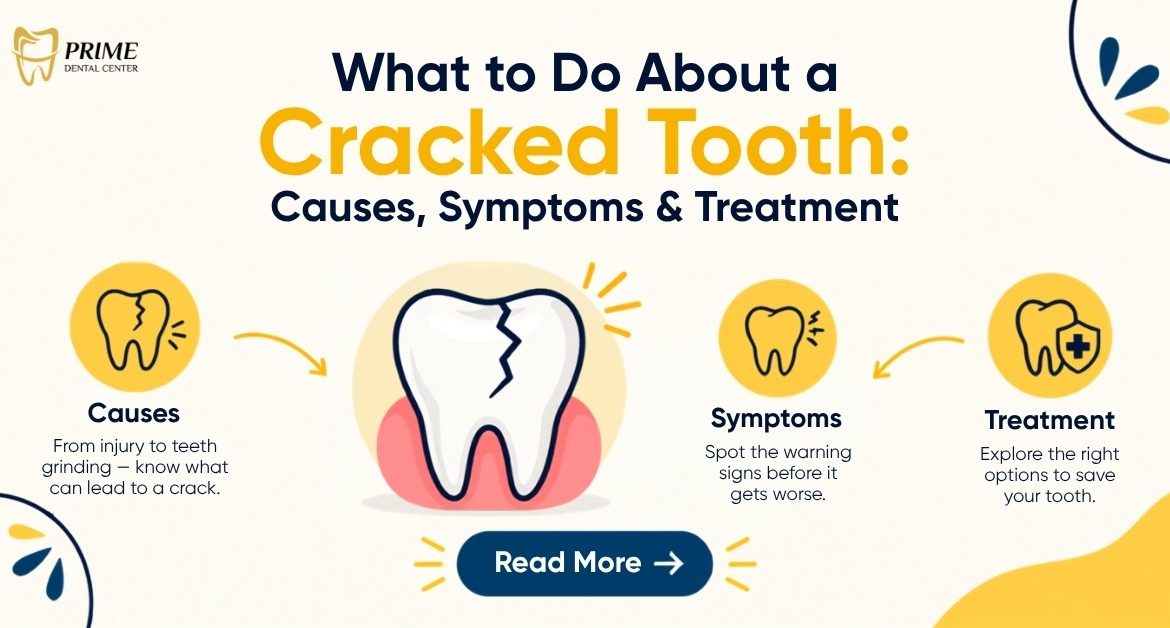
A cracked tooth can result from injury, teeth grinding, or biting hard foods. Symptoms include sharp pain when chewing, sensitivity to temperature, or discomfort that comes and goes. Treatment depends on the severity of the crack and may include bonding, a crown, root canal therapy, or extraction. Seeing a dentist promptly helps prevent the crack from worsening.
A cracked tooth is one of those dental problems that’s easy to brush off—until it isn’t. Maybe you felt a sharp twinge while biting into something crunchy, or a nagging sensitivity that just won’t go away. Either way, a cracked tooth is something worth taking seriously.
Cracks don’t always show up on X-rays, and they don’t always hurt right away. That’s part of what makes them tricky. Left untreated, a small crack can deepen, affect the tooth’s nerve, and ultimately lead to tooth loss. The good news is that most cracked teeth can be treated successfully, especially when caught early.
This guide covers everything you need to know: what causes a cracked tooth, how to recognize the symptoms, the different types of cracks, and the treatment options available to you. If you’re experiencing tooth pain or sensitivity and aren’t sure what’s going on, keep reading—this post will help you figure out your next step.
Common Causes of Cracked Teeth: What You Should Know
Teeth are incredibly strong, but they’re not indestructible. A crack can happen for a number of reasons, some obvious and some less so.
Biting down on hard foods or objects is one of the most common culprits. Popcorn kernels, ice, hard candy, and even certain nuts can put enough pressure on a tooth to cause a fracture. It only takes one bad bite.
Teeth grinding (bruxism) is another major cause. Many people grind their teeth at night without realizing it. Over time, the constant pressure wears down enamel and can lead to cracks throughout the mouth—not just in one spot.
Sudden temperature changes can also play a role. Going from a hot drink to an ice-cold one puts your teeth through rapid expansion and contraction—a cycle that stresses enamel and can lead to cracks over time. Trauma or injury—such as a fall, a sports injury, or a blow to the face—can crack a tooth outright. Accidents happen, and teeth sometimes bear the brunt.
Age is a contributing factor as well. Most people who experience cracked teeth are over the age of 50, when enamel naturally becomes more brittle. Teeth that have had large fillings or prior dental work can also be more susceptible to cracking.
What Signs Indicate You May Have a Cracked Tooth?
Here’s the tricky part: cracked tooth symptoms can be inconsistent. You might feel pain when biting, then nothing at all an hour later. This on-and-off pattern is actually one of the most telling signs.
Common symptoms include:
- Sharp pain when chewing or biting, especially when you release pressure
- Increased Sensitivity to Hot, Cold, or Sweet Foods and Drinks
- Pain that comes and goes rather than staying constant
- Swelling around the affected tooth or gum
- Discomfort that’s hard to pinpoint to a specific tooth
Because the symptoms mimic those of other dental issues—like a cavity or gum disease—a cracked tooth can be difficult to diagnose without a professional examination. Your dentist may use a dental explorer, special dye, or a bite test to locate and assess the crack.
If you’re experiencing any of these signs, don’t wait. Early diagnosis makes a real difference in how the tooth can be treated and whether it can be saved.
What Are the Different Types of Cracked Teeth?
Not all cracks are created equal. Dentists classify cracked teeth into several categories, and the type of crack determines what treatment is most appropriate.
Craze lines
These are tiny, surface-level cracks in the outer enamel. They’re extremely common, usually painless, and rarely require treatment beyond cosmetic concern. Almost every adult has some craze lines.
Fractured cusp
This type of crack occurs around a dental filling. The cusp—the pointed part of the chewing surface—breaks off or weakens. It usually doesn’t affect the pulp (the inner layer of the tooth), so it rarely causes much pain and responds well to treatment.
Cracked tooth
A crack that extends from the chewing surface downward toward the root. This is the most common type people refer to when they say they’ve cracked a tooth. If the crack hasn’t reached the root, the tooth can often be saved. If it has, the prognosis is more complicated.
Split tooth
A split tooth is what happens when a cracked tooth goes untreated. The tooth is divided into two distinct segments. In most cases, the entire tooth cannot be saved, though a portion of it may be preserved depending on where the split occurs.
Vertical root fracture
This crack begins at the root and extends upward toward the chewing surface. It often goes unnoticed for a long time because symptoms are minimal. Unfortunately, vertical root fractures frequently result in tooth extraction.
What Are the Treatment Options for a Cracked Tooth?
Treatment depends heavily on the location and severity of the crack. Here’s a breakdown of the most common approaches:
Dental bonding or cosmetic contouring
For minor cracks or craze lines that don’t affect the nerve, a dentist may use tooth-colored resin to fill in the crack or smooth the surface. This is a quick, non-invasive option that works well for superficial damage.
Dental crown
A crown is one of the most common treatments for a cracked tooth. It fits over the entire visible portion of the tooth, holding it together and preventing the crack from spreading. Crowns are a good option when the crack is significant but hasn’t reached the pulp. At Prime Dental Center, crowns are crafted using industry-standard materials to look and feel natural while remaining durable long-term.
Root canal therapy
If the crack has extended into the pulp—the soft tissue containing nerves and blood vessels—a root canal may be necessary. Root canal treatment removes the damaged pulp, cleans the canal, and seals the tooth. A crown is typically placed afterward to protect the tooth. Dr. Akshay Rajpal at Prime Dental Center has performed over 10,000 root canal procedures, bringing exceptional expertise and a gentle touch to what many patients find to be a daunting procedure.
Tooth extraction
When a crack extends below the gum line, or when the tooth is split in a way that can’t be repaired, extraction may be the only viable option. Following extraction, tooth replacement options—such as a dental implant or bridge—can restore function and appearance.
The general rule: the sooner you seek treatment, the more options you’ll have. A crack that’s treated early is far more likely to be saved than one that’s been ignored for months.
When Should You See a Dentist for a Cracked Tooth?
The short answer is: as soon as possible. But here are the situations that call for urgent care:
- You’re in significant pain that isn’t going away
- Part of your tooth has visibly broken off
- You notice swelling in the gum or jaw around the tooth
- Sensitivity has become severe, making it difficult to eat or drink
- You suspect you injured a tooth after a fall or impact
Even if your symptoms seem mild, it’s worth getting checked out. A crack that’s barely noticeable today can become a serious problem quickly—especially with the daily pressure of eating and chewing.
Dental anxiety is real, and it keeps many people from seeking care until things get painful. But at Prime Dental Center in Stratford and Marlton, NJ, the team prioritizes a calm, comfortable experience from the moment you walk in. As one patient, Maria, put it: “I truly have a fear of dentists. But he was so understanding and gentle—I actually asked about making another appointment.”
If it’s been a while since your last visit, or if you’re experiencing any of the symptoms described in this post, there’s no better time to schedule a check-up.
Take the Next Step: Protect Your Smile Before the Problem Gets Bigger
A cracked tooth isn’t something to put off. The longer it goes untreated, the fewer options you have—and the more likely you are to face more complex treatment down the road.
At Prime Dental Center, Dr. Akshay and Dr. Snehal Rajpal offer comprehensive restorative care for cracked and damaged teeth, using the latest techniques to help you keep your smile healthy and intact. Whether you need a simple bonding procedure or a full crown, the team is here to guide you through every step.
Ready to get it sorted? Request an appointment at Prime Dental Center today. Serving patients in Stratford and Marlton, NJ.
Frequently Asked Questions About Cracked Teeth
Can a cracked tooth heal on its own?
No. Unlike bone, tooth enamel cannot regenerate or repair itself. Once a crack forms, it will not heal without dental treatment. Ignoring a cracked tooth typically allows the crack to deepen, which can lead to more serious damage and more invasive treatment.
How do dentists diagnose a cracked tooth?
Dentists use several methods to locate and assess a crack, including visual examination, a dental explorer to feel for irregularities, bite tests, dental dye that highlights cracks, and in some cases, X-rays. Since not all cracks are visible on X-rays, a thorough clinical exam is often the most reliable diagnostic tool.
Is a cracked tooth a dental emergency?
It depends on the severity. If you’re in severe pain, have a visible chunk of tooth broken off, or notice swelling, treat it as an emergency and contact your dentist right away. Mild sensitivity or discomfort should still be evaluated promptly, but may not require emergency care.
How much does cracked tooth treatment cost?
Cost varies based on the type of treatment required. Bonding is typically the most affordable option, while crowns and root canals involve more significant investment. Most dental insurance plans cover some portion of restorative treatments. Prime Dental Center accepts major dental insurance plans—contact the office to discuss your coverage.
Can I prevent a cracked tooth?
You can reduce the risk significantly. Wear a mouthguard if you grind your teeth at night or play contact sports. Avoid biting down ons hard foods like ice and unpopped popcorn kernels. Keep up with regular dental check-ups so small issues are caught early. Good oral hygiene and routine care go a long way toward keeping your teeth strong.
What happens if I don’t treat a cracked tooth?
An untreated crack can deepen over time, eventually reaching the tooth’s root or pulp. This can lead to infection, abscess, significant pain, and ultimately tooth loss. What might have been treated with a simple crown can become a root canal—or worse, an extraction—if left too long.